
Early Signs of Multiple Sclerosis (MS)
- Aishwariya Farahi
- 4 days ago
- 3 min read


The Quiet Beginning
Multiple sclerosis rarely begins with something obvious.
More often, it starts with subtle changes that are easy to overlook.
A moment of blurred vision.
A strange tingling sensation.
A level of fatigue that feels out of proportion.
Individually, these may not seem significant.
But together, they begin to tell a story.
Why Early Signs Are Often Missed
Early MS symptoms can be:
Mild
Temporary
Inconsistent
They may come and go.
And when they disappear, it’s easy to assume everything is fine.
But early awareness matters—not for fear, but for clarity.
Common Early Signs of MS
Some of the most frequently reported early symptoms include:
Vision Changes
Blurred or double vision
Pain when moving the eye
Temporary vision loss
Numbness or Tingling
Often in the face, arms, or legs
May feel like pins and needles
Fatigue
Deep, persistent tiredness
Not relieved by rest
Balance and Coordination Issues
Feeling unsteady
Difficulty with coordination
Muscle Weakness
Especially in the limbs
May affect walking or grip strength
The Pattern of Early Symptoms
One of the defining features of early MS is this:
Symptoms often come and go.
They may:
Appear suddenly
Improve partially or completely
Return later in a different form
This pattern can make early MS difficult to recognize.
When to Pay Attention
It’s important to seek medical advice if symptoms are:
Persistent
Recurrent
Unexplained
Affecting your daily life
A Grounded Perspective on Early Signs
Not every symptom means MS.
And not every early sign leads to a diagnosis.
But paying attention to your body is always valuable.
Awareness is not something to fear—it’s something to use.
A Final Thought
Your body often speaks quietly before it speaks loudly.
Learning to listen early gives you:
Insight
Opportunity
A starting point for support
And that can make a meaningful difference over time.
I invite you to take the next step.
Frequently Asked Questions
Can early MS symptoms last only a few days and still be significant?
Yes. Early MS symptoms can appear briefly—sometimes lasting just a few days—and then disappear. This is part of the relapsing nature of Multiple Sclerosis, where inflammation comes and goes. Even short-lived symptoms are worth noting if they are unusual or recur.
Why do MS symptoms often affect vision first?
The optic nerve is commonly one of the first areas affected in MS due to inflammation (optic neuritis). Because it’s highly sensitive, even mild inflammation can quickly lead to noticeable vision changes like blurriness, pain, or temporary loss.
Is MS fatigue different from regular tiredness?
MS fatigue tends to feel deeper and more persistent than normal tiredness. It’s often described as overwhelming exhaustion that doesn’t improve with rest and can interfere with basic daily tasks, even after adequate sleep.
Can stress or lifestyle factors mimic early MS symptoms?
Yes—stress, poor sleep, nutrient deficiencies, and even anxiety can cause symptoms like tingling, fatigue, or brain fog. That’s why patterns (recurrence, progression, or combination of symptoms) matter more than a single isolated experience.
How do doctors distinguish early MS from other conditions?
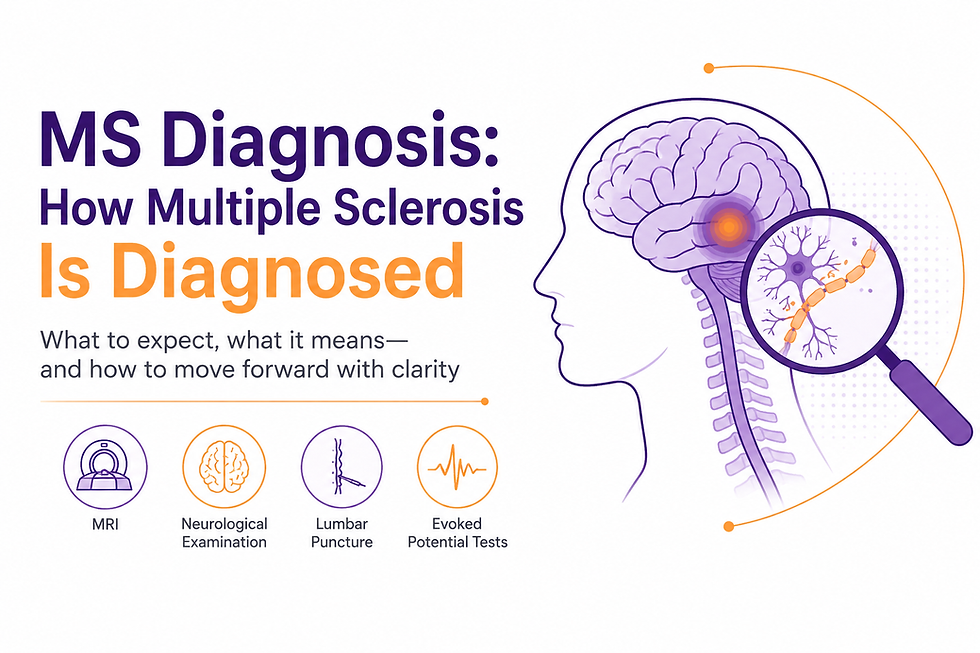
Diagnosis typically involves a combination of neurological exams, MRI scans to detect lesions, and sometimes spinal fluid analysis. Doctors look for evidence of damage occurring in different parts of the nervous system over time.
Do early MS symptoms always progress quickly?
Not necessarily. Some people experience mild symptoms for years before receiving a diagnosis, while others may notice more rapid changes. The course of MS varies widely from person to person.
Can early MS symptoms appear in different parts of the body at different times?
Yes, and this is a key characteristic. Symptoms may affect one area (like vision), improve, and later show up somewhere else (like numbness in a limb). This “dissemination in space and time” is a hallmark of MS.
What should you track if you suspect early MS symptoms?
Keep a simple record of:
When symptoms start and stop
What they feel like
What body part is affected
Any triggers (stress, illness, fatigue)
This kind of pattern tracking can be extremely helpful for medical evaluation and early clarity.


Comments